clapgeek logo

Refer to the exhibit.
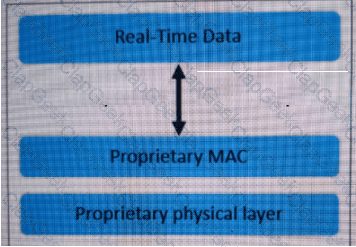
An industrial Ethernet protocol skipping layers 3 to 6 is shown. Which industrial Ethernet protocol is it? (Choose one answer)
Refer to the exhibit.
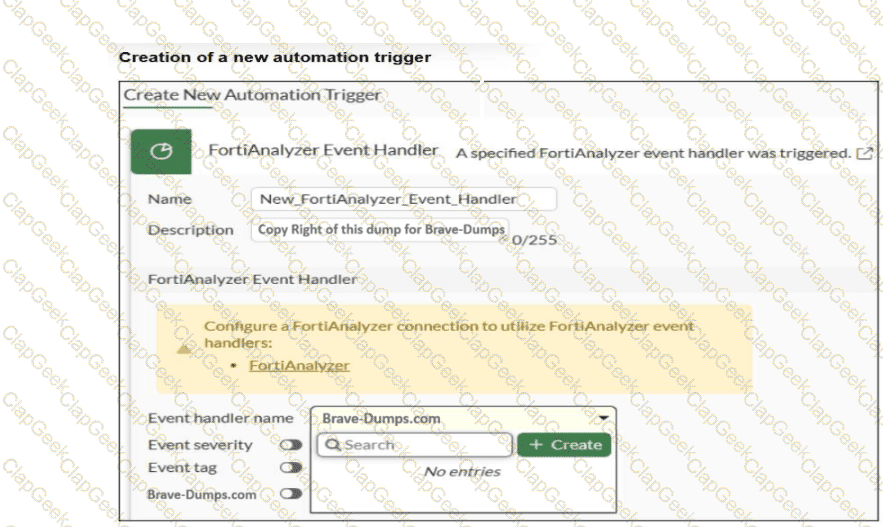
An automation trigger creation wizard is shown. You want to automate some tasks in your OT network. In a FortiGate device, you create a new automation trigger based on a FortiAnalyzer event handler. When you want to configure the Event handler name field, the event handler created in FortiAnalyzer is not shown. What are two reasons for this? (Choose two answers)
Refer to the exhibit.
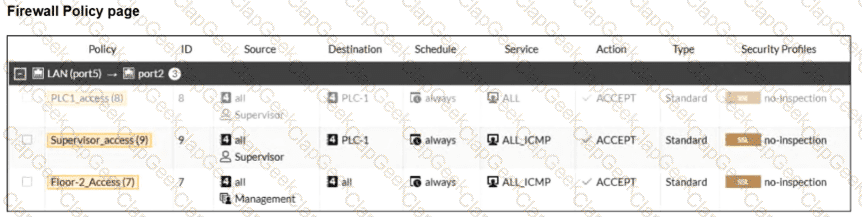
The configuration of firewall policies is shown.
To improve the security of your OT network, you have configured authentication in the firewall policies as shown in the exhibit, with CLI parameters set to their default settings. However, when you test HTTPS access from the LAN subnet to PLC-1, it is successful without any authentication prompt.
What is the reason?
You want to automate some tasks in your OT network. Which three configurations are directly available in a new basic event handler on FortiAnalyzer? (Choose three answers)
Refer to the exhibit.

You have configured event handlers on FortiAnalyzer to monitor your OT network.
Based on the partial Event Monitor page shown in the exhibit, which statement is correct?
Refer to the exhibits.
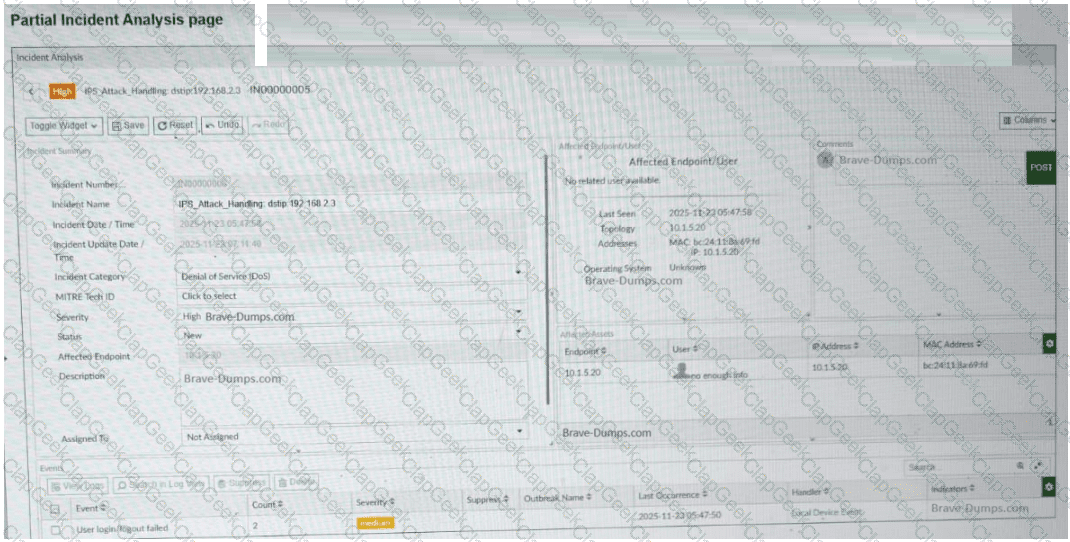
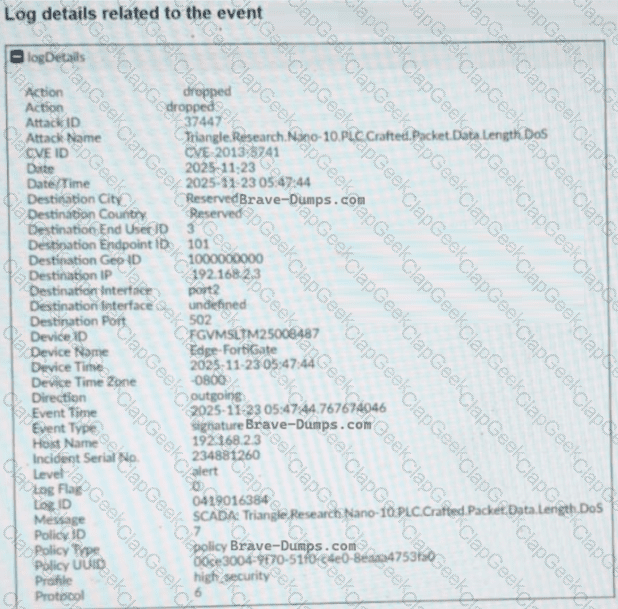
A partial Incident Analysis page and the log details related to the event are shown. An attack is reported on your OT network. You analyze the corresponding incident. Based on the information provided on the Incident Analysis page and the log details, which two statements are correct? (Choose two answers)
You want to gain complete visibility of the entire attack surface using FortiAnalyzer.
Which two views must you use to achieve this result? (Choose two.)
Refer to the exhibit.

Based on the information provided on the partial Event Monitor page shown in the exhibit, how was the attack detected? (Choose one answer)
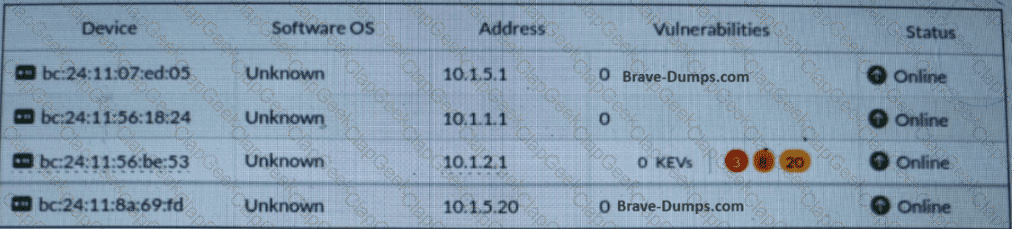
Refer to the exhibit.
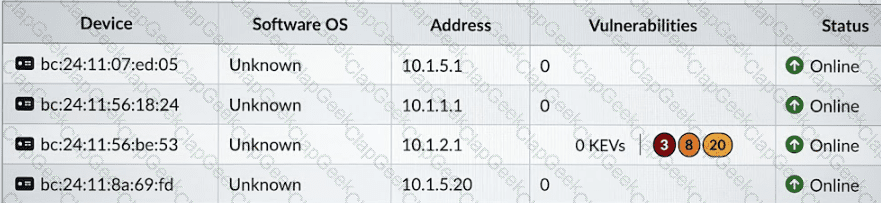
Which statement about this partial Asset Identity List page is correct? (Choose one answer)
Refer to the exhibit.
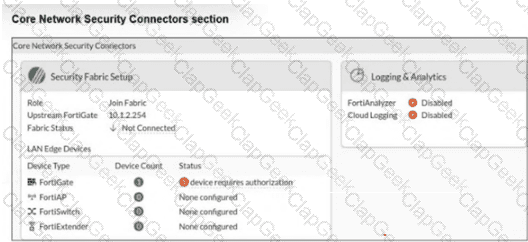
The Core Network Security Connectors page of the FortiGate-2 device is shown. Which statement is correct? (Choose one answer)
Refer to the exhibit.
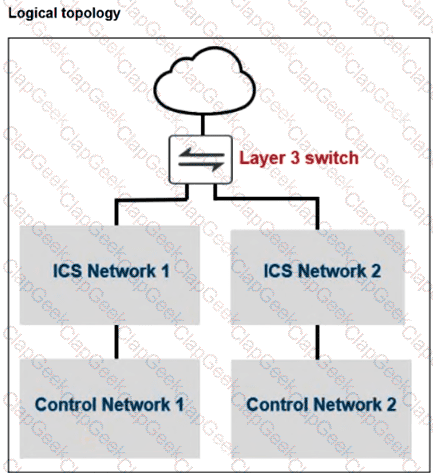
A partial OT network is shown. You must improve the security of this OT network and implement internal segmentation between network 1 and network 2. How can you achieve the segmentation? (Choose one answer)
According to the IEC 62443 standard, your security level is 4 . What is your OT environment defending against? (Choose one answer)
Refer to the exhibit.
Which statement about this partial Asset Identity List page is correct? (Choose one answer)




TESTED 07 Oct 2026