clapgeek logo

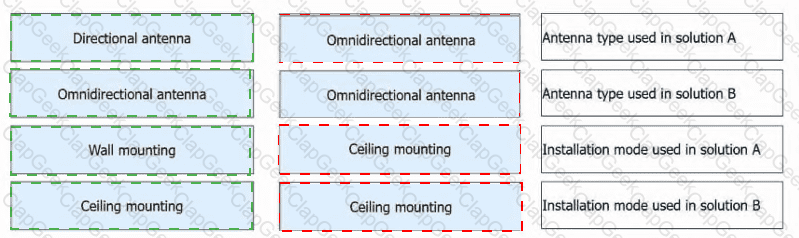
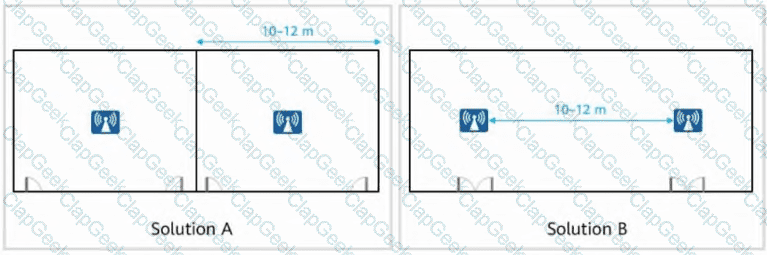
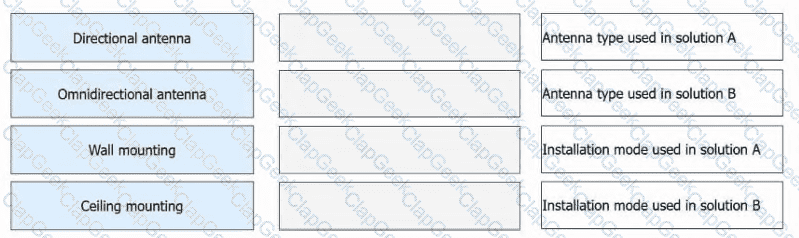
In classroom settings, indoor floor height is generally about 3 m to 5 m. The following figure presents WLAN planning solutions for typical classrooms and lecture halls. Match the recommended antenna types and installation modes to the two solutions.
CAPWAP is an application-layer protocol for communication between WACs and Fit APs. Its TCP-based transmission mechanism provides reliable data delivery, improving WLAN stability.
In inter-WAC roaming scenarios, WACs can be placed into different groups. STAs can roam among WACs within the same group, which is called a mobility group. A WAC can serve as the mobility server for multiple mobility groups, but it can be added to only one mobility group.
A large enterprise must deploy a WLAN that provides wireless access services to both employees and guests. However, guest traffic can create security risks for the network. Which of the following networking modes is suitable for this scenario to ensure network security?
For the parking-lot scenario shown, it is recommended to deploy APs above lanes and at intersections as well, to provide continuous signal coverage.
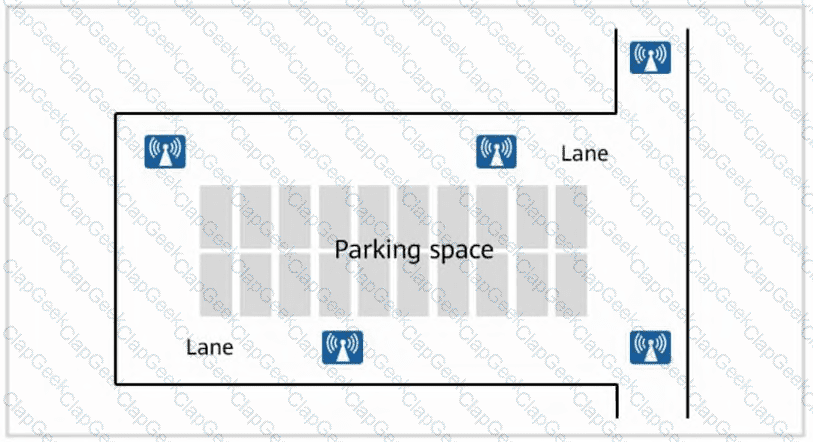
Original exhibit: Q25 Parking Exhibit
An AP steers a STA when that STA satisfies the steering conditions. STAs running voice or video services are not steered.
Which of the following statements are accurate about the wireless health evaluation feature in CampusInsight?
CHOOSE THREE
During WLAN planning and design for hospital wards and consultation rooms, two planning solutions are proposed, as illustrated. Which of the following statements are correct for selecting a solution in this scenario?
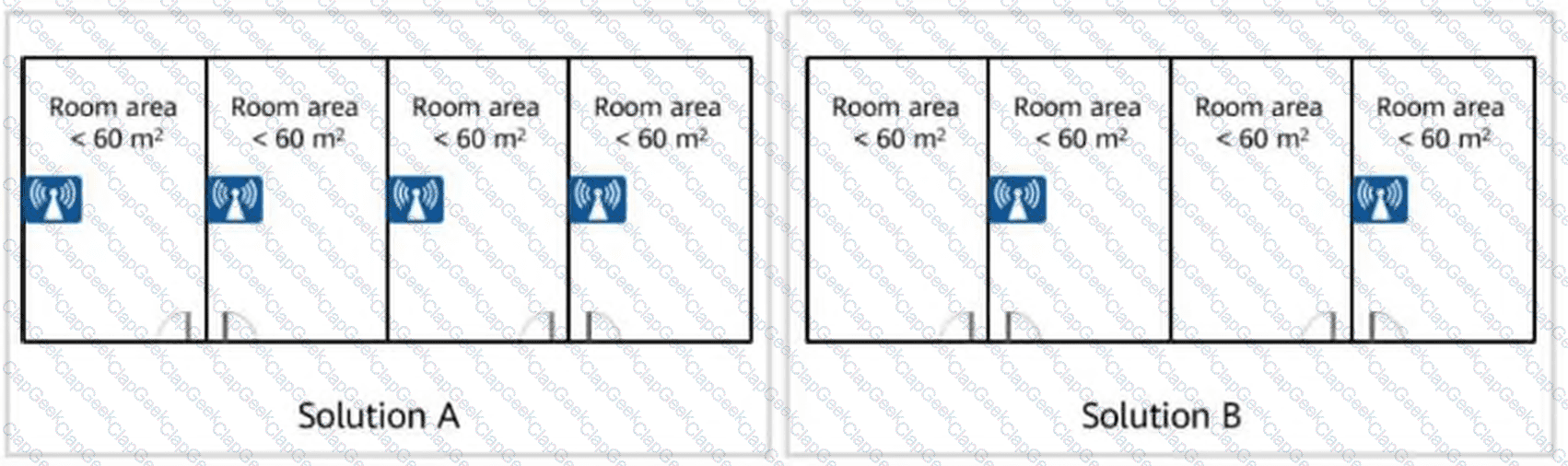
Original exhibit: Q55 Enlarged Exhibit
CHOOSE TWO
When using the CloudCampus APP to run a speed test, the Internet speed test cannot be performed if the radio signal associated with the current STA cannot access the Internet.
During acceptance testing of a customer’s wireless network, an engineer discovers that a terminal has a poor service experience. The engineer uses CampusInsight’s user journey function to check the terminal’s service experience, as shown below. Which of the following could cause the poor service experience?
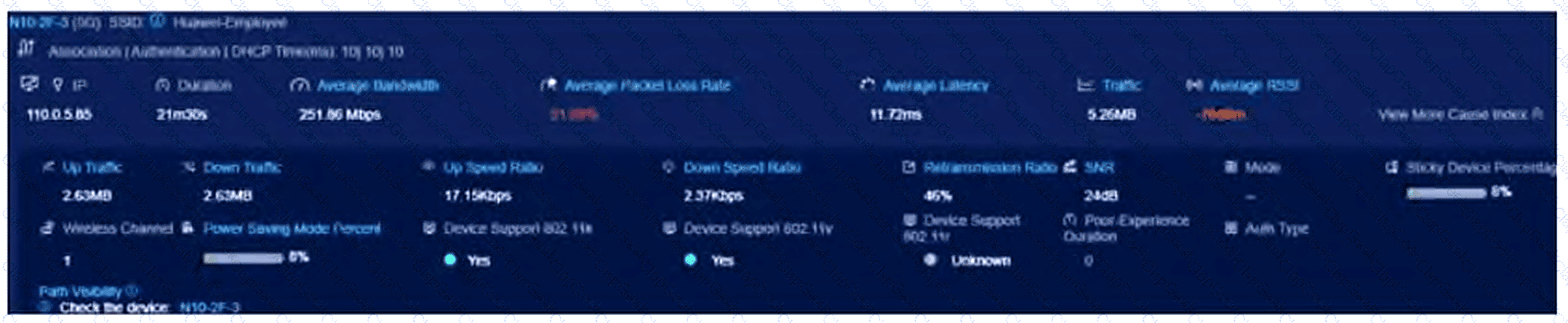
Original exhibit: Q48 Enlarged Exhibit
Roaming handover time is a key factor affecting WLAN service experience when an STA roams. Fast roaming with PMK caching reduces roaming latency for 802.IX users and improves WLAN service experience. Which of the following helps reduce roaming latency in fast roaming that uses PMK caching?
Assume Portal authentication is configured on a Huawei WAC. To make sure STAs can access the Portal authentication page, which traffic direction must be permitted in the authentication-free profile on the access device?

TESTED 20 Nov 2026