Big Cyber Monday Sale 70% Discount Offer - Ends in 0d 00h 00m 00s - Coupon code: clap70

EFM Certified - Electronic Fetal Monitoring Questions and Answers

Questions 4

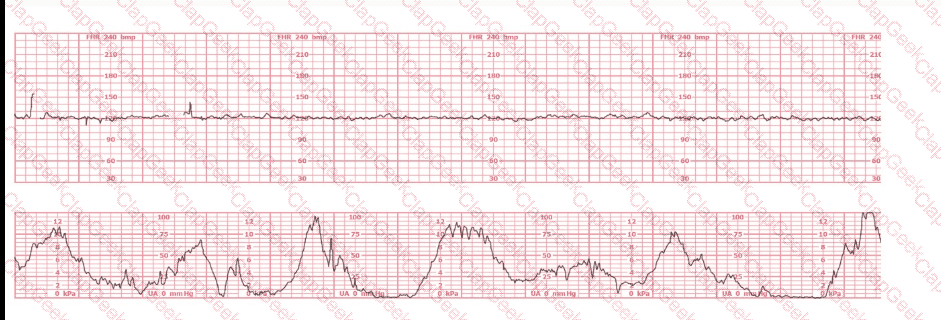
The tracing shown is a:

Options:

A.

Category I

B.

Category II

C.

Category III

Buy Now
Questions 5

Maternal fever can cause fetal tachycardia because the increased maternal temperature:

Options:

A.

Decreases tissue perfusion

B.

Increases fetal metabolism

C.

Inhibits catecholamine release

Buy Now
Questions 6

A woman at 34-weeks gestation is in active labor after spontaneous rupture of membranes. Accelerations should be documented as

Options:

A.

absent

B.

present 10×10

C.

present 15×15

Buy Now
Questions 7

When evaluating a baseline fetal heart rate change, the fetal heart rate is assessed for a minimum of:

Options:

A.

10 minutes

B.

15 minutes

C.

30 minutes

Buy Now
Questions 8

The most common fetal heart rate pattern consistent with uterine rupture is

Options:

A.

absent variability

B.

loss of uterine pressure

C.

prolonged and variable decelerations

Buy Now
Questions 9

The presence of fetal breathing movements on a biophysical profile reflects adequate:

Options:

A.

Neurologic function

B.

Pulmonary vasoconstriction

C.

Surfactant levels

Buy Now
Questions 10

During the second stage of labor, a period of bradycardia develops. The fetal heart rate baseline variability is moderate. The most likely cause of this bradycardia is:

Options:

A.

Cord compression

B.

Vagal stimulation

C.

Vasospasm

Buy Now
Questions 11

The factor that differentiates a prolonged deceleration from bradycardia is:

Options:

A.

Baseline rate

B.

Length of time it lasts

C.

Relationship to contractions

Buy Now
Questions 12

A reliable indicator of fetal oxygenation is fetal

Options:

A.

heart rate accelerations

B.

movement

C.

regular sleep–wake cycles

Buy Now
Questions 13

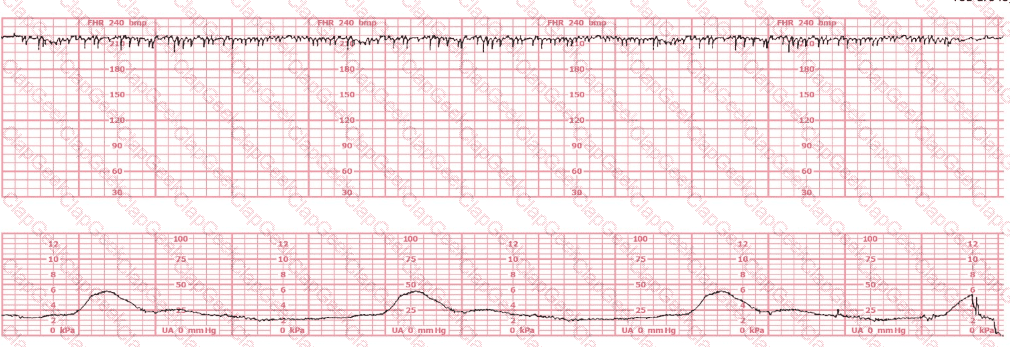
The fetal heart rate tracing shown is consistent with

Options:

A.

artifact

B.

half counting

C.

supraventricular tachycardia

Buy Now
Questions 14

Fetal supraventricular tachycardia will often appear on the monitor as

Options:

A.

artifact

B.

half the actual rate

C.

the same rate as the maternal pulse

Buy Now
Questions 15

Sustained fetal supraventricular tachycardia that goes untreated is most likely to result in:

Options:

A.

Fetal anemia

B.

Hydrops fetalis

C.

The need for a neonatal pacemaker

Buy Now
Questions 16

When documenting the occurrence of late decelerations in the medical record, what should be charted?

Options:

A.

Components of the tracing

B.

Notation that the tracing was normal or abnormal

C.

Tracing category

Buy Now
Questions 17

To differentiate a fetal dysrhythmia from artifact, it is important to recognize that artifact appears as deflections that are:

Options:

A.

Similar in pattern

B.

Uniform but occur irregularly

C.

Varied and disorganized

Buy Now
Questions 18

When R-R intervals are short, the fetal heart rate is

Options:

A.

fast

B.

normal

C.

slow

Buy Now
Questions 19

A fetal heart rate deceleration that is episodic is a/an:

Options:

A.

Early deceleration

B.

Late deceleration

C.

Variable deceleration

Buy Now
Questions 20

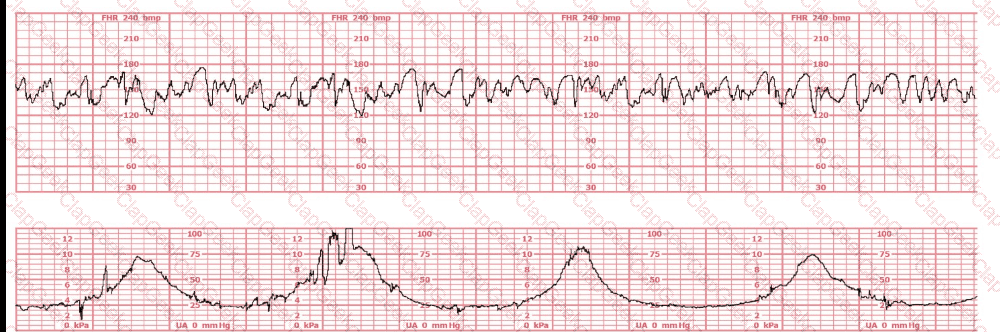
The decelerations seen in the fetal monitoring tracing shown are best described as:

Options:

A.

Early

B.

Late

C.

Variable

Buy Now
Questions 21

An electronic fetal monitoring factor that best correlates with fetal well-being is:

Options:

A.

Absence of decelerations

B.

Baseline heart rate 140–150 bpm

C.

Presence of variability

Buy Now
Questions 22

Stimulation of the vagus nerve in a healthy fetus will cause:

Options:

A.

Decreased fetal heart rate

B.

Increased cardiac contractility

C.

Increased fetal blood pressure

Buy Now
Questions 23

A woman at 36-weeks gestation comes in because of uterine contractions radiating to the back. She has no insurance. In accordance with the Emergency Medical Treatment and Active Labor Act (EMTALA), she is obligated to be:

Options:

A.

Admitted without delay

B.

Stabilized and receive a medical screening examination

C.

Transferred to a safety-net hospital

Buy Now
Questions 24

A 30-minute tracing with moderate variability, accelerations, and one variable deceleration would be classified as:

Options:

A.

Category I

B.

Category II

C.

Category III

Buy Now
Questions 25

The baseline fetal heart rate in this tracing is:

Options:

A.

155 beats per minute

B.

Indeterminate

C.

Tachycardia

Buy Now
Questions 26

Intermittent fetal heart rate auscultation for a low-risk, spontaneous laboring patient who is 4–5 centimeters dilated should be assessed at intervals every

Options:

A.

5–10 minutes

B.

15–30 minutes

C.

45–60 minutes

Buy Now
Questions 27

(Full question statement)

Recurrent decelerations are defined as occurring with 50% or more of contractions in any window of how many minutes?

Options:

A.

15

B.

20

C.

30

Buy Now
Questions 28

Upon admission, the clinician discusses indications, risks, and benefits of electronic fetal monitoring. This reflects which ethical concept?

Options:

A.

Autonomy

B.

Fiduciary

C.

Informed consent

Buy Now
Questions 29

Tachysystole can have a negative effect on fetal oxygenation during labor by

Options:

A.

blocking active transport of oxygen to the fetus

B.

increasing maternal blood pressure

C.

interfering with reperfusion of the intervillous space

Buy Now
Questions 30

When auscultating the fetal heart rate, the Doppler should be placed over the fetal:

Options:

A.

Abdomen

B.

Back

C.

Chest

Buy Now
Questions 31

An internal electronic fetal monitor tracing continues to record artifact despite equipment troubleshooting and replacement of the spiral electrode. The next action is to:

Options:

A.

Auscultate the fetal heart rate

B.

Provide oxygen

C.

Reposition the woman

Buy Now
Questions 32

Patient safety is enhanced when alarms:

Options:

A.

Are determined by the unit leaders

B.

Can be called by anyone

C.

Occur infrequently

Buy Now
Questions 33

The baseline heart rate of a 28-week fetus is 170 bpm. The next step is to:

Options:

A.

Assess maternal vital signs

B.

Continue observation

C.

Perform a biophysical profile

Buy Now
Questions 34

The fetal heart rate baseline is

Options:

A.

documented in a 15 beats per minute range

B.

established between periodic and episodic changes

C.

normally between 110 and 170 beats per minute

Buy Now
Questions 35

(Full question statement)

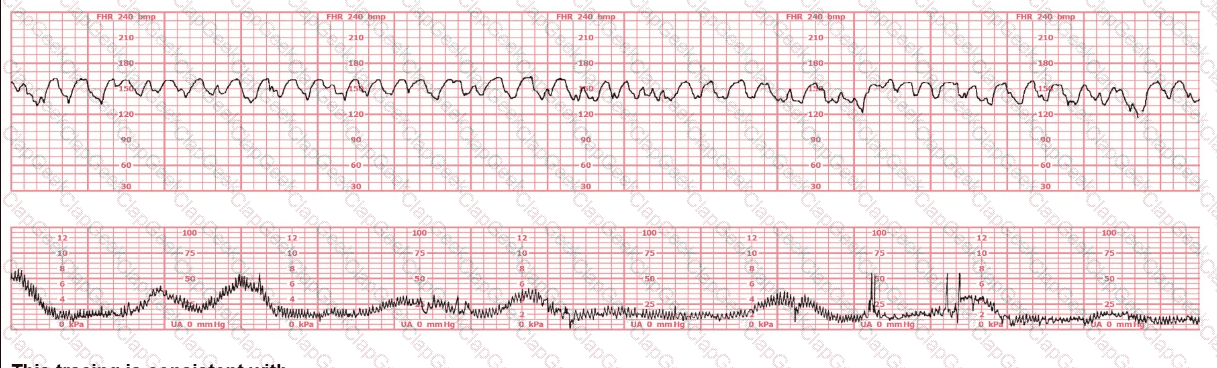
This tracing is consistent with:

Options:

A.

Atrial flutter

B.

Effects of butorphanol administration

C.

Fetal-maternal transfusion

Buy Now
Questions 36

A woman who is one week past a confirmed due date has serial ultrasounds to determine:

Options:

A.

Amniotic fluid volume

B.

Fetal weight

C.

Placental calcification

Buy Now
Questions 37

The main reason intrauterine pressure catheters are placed is to:

Options:

A.

Define the quality of the fetal baseline

B.

Determine the contraction pattern

C.

Rule out artifact

Buy Now
Exam Code: EFM
Exam Name: Certified - Electronic Fetal Monitoring
Last Update: Dec 4, 2025
Questions: 125
EFM pdf

EFM PDF

$25.5  $84.99
EFM Engine

EFM Testing Engine

$30  $99.99
EFM PDF + Engine

EFM PDF + Testing Engine

$40.5  $134.99